
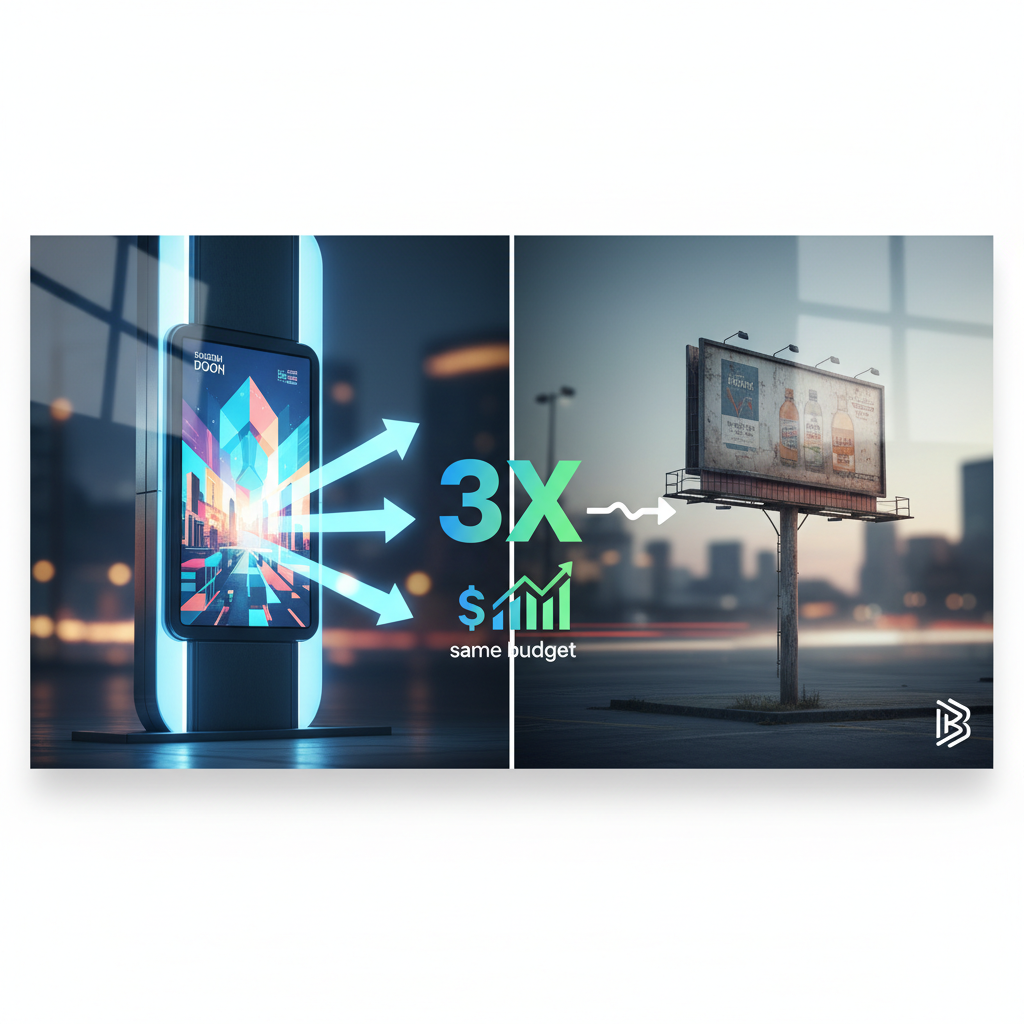
DOOH vs. traditional billboards: Digital screens deliver 3x more engagement for the same budget
Key Takeaways
- Digital out-of-home (DOOH) offers 3x higher engagement than traditional billboards for the same budget in 2026.
- DOOH provides dynamic content, real-time relevance, and superior measurement compared to static billboards.
- Creative flexibility and contextual targeting allow DOOH campaigns to adapt to events, weather, and audience needs instantly.
- Enhanced data and attribution in DOOH enable precise measurement of campaign performance and ROI.
- Strategic implementation of DOOH involves defining objectives, choosing strategic locations, crafting concise creative, leveraging real-time data, and continuous optimization.
In 2026, businesses seeking to capture audience attention in outdoor advertising face a choice: traditional billboards or digital out-of-home (DOOH) solutions. While both offer visibility, the distinction in engagement and return on investment has become clear. Digital screens are a more effective use of marketing spend, often delivering up to three times the engagement for the same budget.
This comparison explores why digital billboard advertising, with its dynamic capabilities and data-driven insights, is a choice for brands looking to make a measurable impact in 2026. From flexibility to advanced targeting, the advantages of a digital screen transform outdoor advertising in the UK.
Understanding traditional billboard advertising
Traditional billboard advertising, a staple of outdoor advertising in the UK, uses static printed posters placed in high-traffic areas. These large displays have been used for brand awareness for decades. Their primary strength is their ability to reach a mass audience repeatedly over a set period. A static billboard can build brand recognition, ensuring a consistent message is seen by thousands of passersby daily.
However, traditional billboards have limitations in 2026. Once printed, the message is fixed for the duration of the campaign, making it impossible to adapt to real-time events, promotions, or market changes. The cost of production and installation for new creative can be substantial, leading to longer campaign durations to justify the expense. Measuring the direct impact of a traditional billboard advertising campaign can be challenging, often relying on broad traffic counts rather than precise engagement metrics. For businesses considering billboard advertising, the answer with traditional formats is often a qualified "yes, but without clear specifics."
The rise of digital out-of-home (DOOH)
Digital out-of-home, or DOOH, is an evolution of outdoor advertising. Instead of static prints, DOOH uses LED screen technology to display dynamic content. These digital screens are strategically located in prime locations, from busy city centers to major commuter routes, offering flexibility and impact. The shift towards DOOH is a trend in outdoor advertising in the UK, driven by technological advancements and advertiser demand for more effective, measurable campaigns.
DOOH includes various forms, such as large-format digital billboards, street furniture displays, and screens within public transport hubs. What sets DOOH apart is its ability to deliver dynamic, contextually relevant content. Advertisers can change their message instantly, display multiple advertisements in rotation, and integrate real-time data feeds, such as weather updates or news headlines, to enhance relevance. This capability allows for engaging and timely campaigns, a contrast to the static nature of traditional options.
Why digital screens offer superior engagement
The claim that digital screens deliver three times more engagement for the same budget is rooted in several advantages that DOOH holds over traditional billboards. These benefits translate into greater audience interaction and campaign effectiveness in 2026.
Dynamic content and creative flexibility
One reason for increased engagement is the dynamic nature of digital screens. Unlike static billboards, a digital screen can feature animations, videos, and rotating advertisements. This movement and variety draw the eye and hold attention longer. A restaurant could advertise a lunch special only during lunchtime hours, or a clothing store could showcase different outfits based on the current weather. This level of responsiveness is not possible with traditional formats.
Updating creative easily means advertisers can run multiple versions of an ad, test different messages, and optimize their campaigns on the fly. This iterative approach allows for continuous improvement and ensures that the most effective creative is always on display, maximizing engagement potential. For more insights on creative strategies, explore our Maximizing impact: Creative digital billboard strategies for Greater Manchester businesses blog post.
Real-time relevance and contextual targeting
DOOH platforms allow for real-time adjustments based on various data points. This includes time of day, day of the week, weather conditions, local events, and audience demographics detected by anonymized sensors. For example, an LED advertising screen near a sports stadium could display ads for team merchandise on game days, or a coffee shop could promote iced drinks during a heatwave. This contextual relevance makes advertisements more engaging because they speak directly to the audience's immediate needs or interests.
This level of targeting ensures that the message is always timely and applicable, increasing the likelihood of capturing attention and driving action. It moves beyond simply being seen to being truly noticed and considered.
Enhanced measurement and attribution
While traditional billboard advertising struggles with precise measurement, DOOH excels. Digital billboard advertising platforms often integrate with analytics tools that track impressions, foot traffic patterns, and mobile device data (anonymized and aggregated) to provide insights into audience demographics and behaviors. This data allows businesses to understand how many people saw their ad, for how long, and how those views translated into website visits or in-store traffic.
For businesses considering if billboard advertising works, DOOH provides concrete answers. This ability to measure campaign performance accurately means advertisers can optimize their spend, prove ROI, and refine future strategies. Learn more about tracking conversions in our article on Data-driven success: How Stockport retailers track DOOH conversions.
Cost-effectiveness and flexibility
While the initial investment in DOOH technology can be higher for providers, the operational costs for advertisers can be efficient. Digital screen campaigns often allow for shorter campaign durations, from a single day to a week, providing flexibility that traditional billboards cannot match. This means businesses can run targeted, short-term promotions without the commitment of a long-term print campaign.
Sharing screen time with other advertisers also makes digital out-of-home more accessible for smaller budgets. Instead of paying for 100% of a static billboard for a month, a business can purchase a percentage of display time on an LED screen, rotating their ad with others. This flexibility allows for broader market penetration and makes high-impact outdoor advertising in the UK accessible to a wider range of businesses.
Implementing a successful digital billboard advertising strategy in 2026
To use the full potential of digital out-of-home, consider these strategic steps for your next outdoor advertising campaign.
1. define your objectives
Before launching any campaign, clearly define what you aim to achieve. Are you looking to increase brand awareness, drive foot traffic to a specific location, promote a new product, or announce a special offer? Clear objectives will guide your creative and targeting choices.
2. choose strategic locations
The effectiveness of a digital screen depends on its location. Consider high-traffic areas relevant to your target audience. For instance, a digital billboard advertising a local restaurant would be most effective on a major road leading into town, while an ad for a business park might target commuter routes. Affinity Media offers premium screen locations across the UK's busiest roads, providing detailed traffic data to help you choose wisely.
3. craft compelling, concise creative
Digital out-of-home is a glance medium. Your message must be brief, impactful, and easy to understand at a glance. Use high-contrast colors, large fonts, and minimal text. Animations and short video clips can be effective, but ensure they convey the message quickly without distracting from the core offering. The dynamic nature of an LED screen allows for creativity, but simplicity is key.
4. leverage real-time data and scheduling
Maximize engagement by utilizing the scheduling capabilities of digital billboard advertising. Schedule different creatives for different times of day, days of the week, or in response to weather changes. This ensures your message is always relevant and timely.
5. measure and optimize
Regularly review the performance data of your digital out-of-home campaigns. Analyze impressions, foot traffic, and any direct conversions. Use these insights to refine your creative, adjust scheduling, and optimize your overall strategy for future campaigns. This continuous improvement cycle is an advantage of DOOH over traditional methods.
The future is digital for outdoor advertising in the UK
The landscape of outdoor advertising in the UK is evolving, with digital out-of-home leading the charge in 2026. The shift from static print to dynamic digital screens offers opportunities for businesses to connect with their audiences in more engaging and measurable ways. For the same budget, digital billboard advertising provides higher engagement, greater flexibility, and superior insights into campaign performance.
If you are considering outdoor advertising, the evidence is clear: investing in a digital screen or LED screen campaign is a strategic move that delivers enhanced value and a stronger return on your marketing investment. To explore how digital out-of-home can transform your advertising efforts, reach out to us today. You can learn more about how we can help you advertise with us and get your brand seen on our premium digital screens.